How to Install the UserWay ADA Compliance Plugin on Your Zibster Website
Overview
Adding the UserWay accessibility widget to your Zibster website helps improve usability and supports ADA and WCAG accessibility best practices. This widget provides tools like text resizing, contrast adjustments, and screen reader enhancements for your visitors.
In this guide, you will learn how to create a UserWay account, install the widget using the Zibster Website Builder, and follow additional accessibility best practices.
Please Note: Zibster is not affiliated with UserWay. For questions about pricing or settings, please contact UserWay Support directly.
Prerequisites
Before you begin, make sure you have:
- An active Zibster website
- A UserWay account (free or paid)
- Access to your UserWay widget script
STEP ONE
Create Your UserWay Account
UserWay is a leading solution for ADA and WCAG compliance, offering both free and paid plans. To get started, create a new UserWay account or sign in to your existing one. Once logged in, UserWay will provide you with a widget code that you'll need to copy for installation on your Zibster website.
STEP TWO
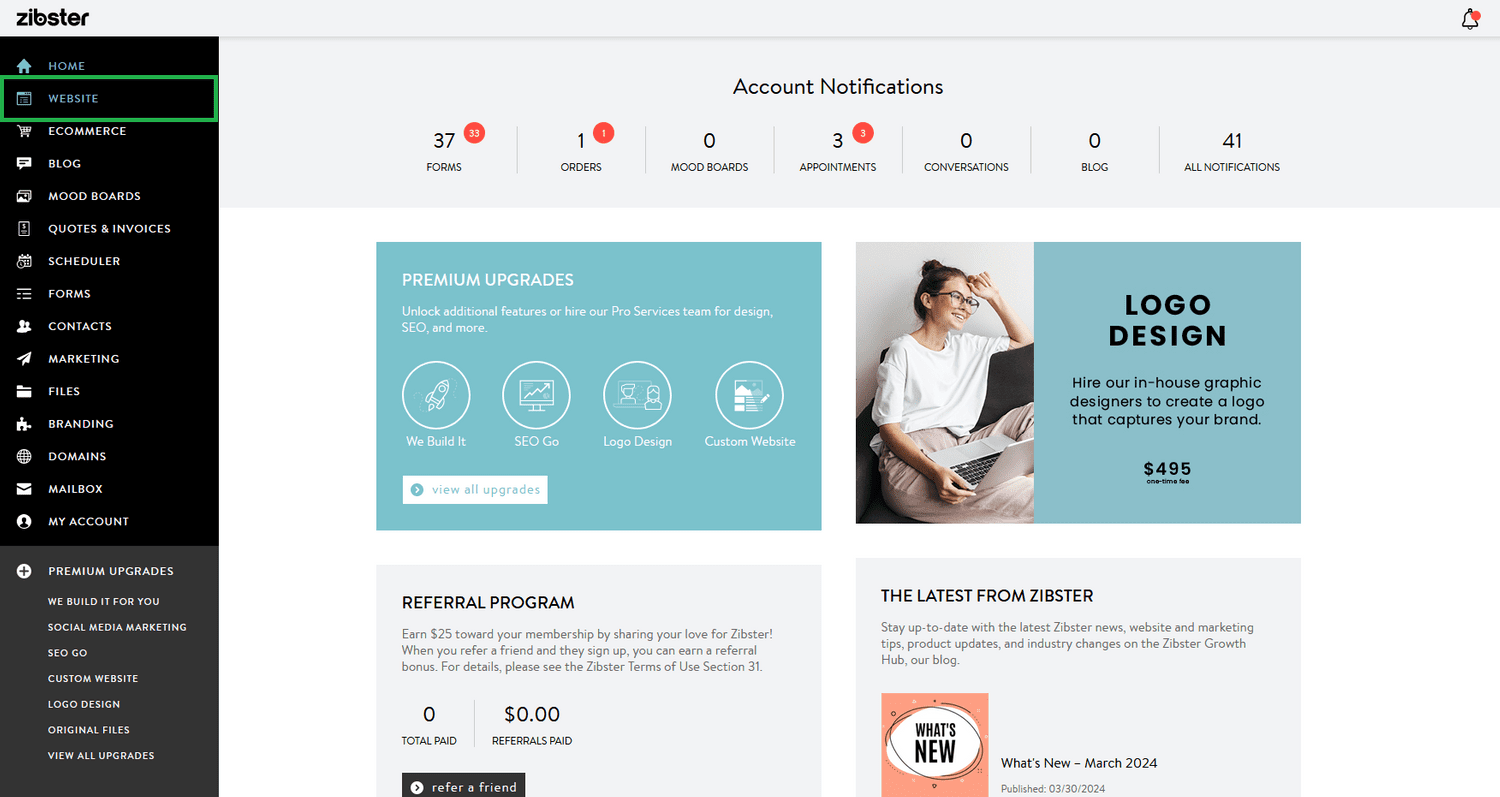
Log into your Zibster account and click on WEBSITE in the left-side menu.

STEP THREE
Access the TRACKING Section
In the Website Builder, click on TRACKING. This section allows you to paste your UserWay code and install the plugin.
STEP FOUR
Paste Your UserWay Code
Paste the UserWay code into the HEAD or BODY section of your website. Once pasted, click SAVE CHANGES at the bottom of the page to complete the installation.
IMPORTANT NOTE: If you have other code/scripts in the tracking section (e.g., Google Analytics, Facebook Pixel), ensure that you paste the UserWay code outside (either above or below) of the existing code.
FINAL STEP
Visit your live website to confirm the UserWay widget appears.
Once installed, you can return to your UserWay account to customize the widget’s appearance, including:
- Icon style
- Position on the screen
- Colors
- Accessibility settings
Additional Options / Helpful Notes
Accessibility Best Practices in Zibster (Recommended)
UserWay enhances accessibility, but your website content also plays a major role in the overall experience.
Add Alt Text to Images
Alt text provides descriptions of images for screen readers and assistive technologies.
Best practices for alt text:
- Clearly describe the image content or purpose
- Keep descriptions short and meaningful
- Add alt text to important images, especially those promoting services
Adding alt text also supports search engine optimization (SEO). You can use Ask Zibster AI to scan and write alt text descriptions for the images you have in your website.
Learn More: How To Write Image Alt Text in Zibster
Use Clear Headings and Readable Content
Organize your pages using clear titles and headings. This helps both visitors and assistive technologies understand your content.
Best practices include:
- Use a clear page title at the top of each page
- Break content into sections with headings
- Avoid long blocks of unstructured text
Design With Accessibility in Mind
Zibster websites are mobile-friendly by default, but content choices still matter.
To improve accessibility:
- Do not place important information only inside images
- Make sure text is easy to read
- Use buttons or links for actions instead of image-only elements
Important Note About ADA Compliance
No single tool or plugin can guarantee full ADA or WCAG compliance.
Accessibility is an ongoing process that depends on your website’s content, structure, and third-party tools. Using Zibster features alongside UserWay can significantly improve accessibility, but regular review and updates are recommended.